Twilight Reflections Along Scott Creek in Portsmouth Virginia

At dusk, the water does not simply reflect the neighbourhood. It remembers it.
Along Scott Creek in Portsmouth, Virginia, evening arrives with a softness that feels almost deliberate. The last light gathers low over the Elizabeth River region. Rooflines darken. Porch lamps blink awake one by one. Windows turn amber. Then the creek begins its quiet work, taking each small human light and stretching it across the surface in threads of gold, rose, and white.
The scene asks for stillness. A camera may come to the eye, but even before the shutter clicks, the heart has already made a picture. The banks hold homes, trees, docks, and old weathered edges of shoreline. The water holds their glow. Between them, twilight becomes a kind of conversation.
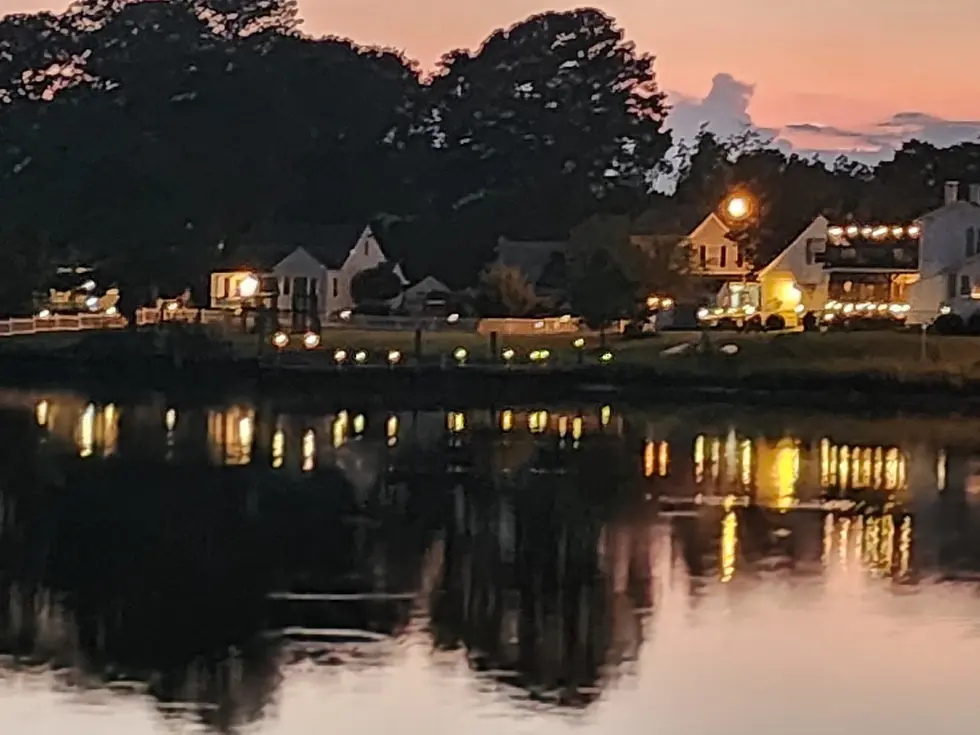
Dusk changes the creek one light at a time
The hour before night is never sudden here. It loosens slowly.
At first, the creek looks brushed in pewter. The sky still holds its pale colour, and the water repeats it with slight distortions. A gull may pass overhead. The dark shape of a piling may cut the surface. Grass at the water’s edge takes on a silver fringe.
Then the houses begin to glow.
A kitchen light appears behind a curtain. A porch lamp burns beside a door. A dock light makes a narrow bar across the water. Each one seems modest on land, yet on the creek it becomes something larger. The smallest bulb widens, breaks, trembles, and reforms. Ripples turn it into a ladder. A passing breeze turns it into loose ribbon.
For a photographer, the scene offers a quiet lesson in patience. The best image may not come when the sky is brightest or when the homes are most sharply seen. It may come in the in-between minute, when land has begun to disappear and water has begun to speak.
This is the blue hour at its most tender. The creek is dark enough to hold light, but not so dark that it swallows detail. The shoreline remains visible in layers: first the houses, then the trees, then the faint outline of roofs and chimneys against the fading sky. The water below gathers it all, not as a copy, but as a dream.
There are reflections, shimmering lines, cozy windows, and the gentle blur of home. Nothing feels staged. Nothing feels hurried. It is simply evening doing what evening has always done, turning ordinary places into small miracles for anyone willing to notice.
The water turns houses into lanterns
A home beside water has two lives at dusk.
One life belongs to the rooms within it. Someone may be making supper. Someone may be placing a glass in the sink, closing a book, calling a dog inside, or standing for a moment at the window without knowing they are part of the view. That world stays mostly private.
The other life belongs to the creek.
On the water, a house becomes a lantern. A rectangle of light loosens from a window and falls into motion. It lengthens, fractures, and trembles with every ripple. A warm yellow glow may turn bronze near the shore and pale silver farther out. Red porch lights become flecks of garnet. White dock lights scatter like beads.
The beauty lies in the way water refuses to hold anything still. A reflection seems present and vanishing at the same time. It has shape, then loses it. It gathers itself, then breaks apart. The eye follows these movements because they feel close to memory.
Memories behave the same way. A porch from childhood. A voice heard at dinner. A boat motor fading across the river. The smell of damp wood after a hot day. These things return not as fixed images, but as wavering light. Clear for a second. Blurred the next. Still worth keeping.
That is why twilight along the creek can feel so personal, even to someone passing through. The scene does not demand a grand story. It invites smaller ones. A first walk with someone loved. A quiet evening after grief. A childhood visit to a relative’s house near the water. A photograph taken long ago and kept in a drawer.
The creek accepts all of it. It does not explain. It reflects.
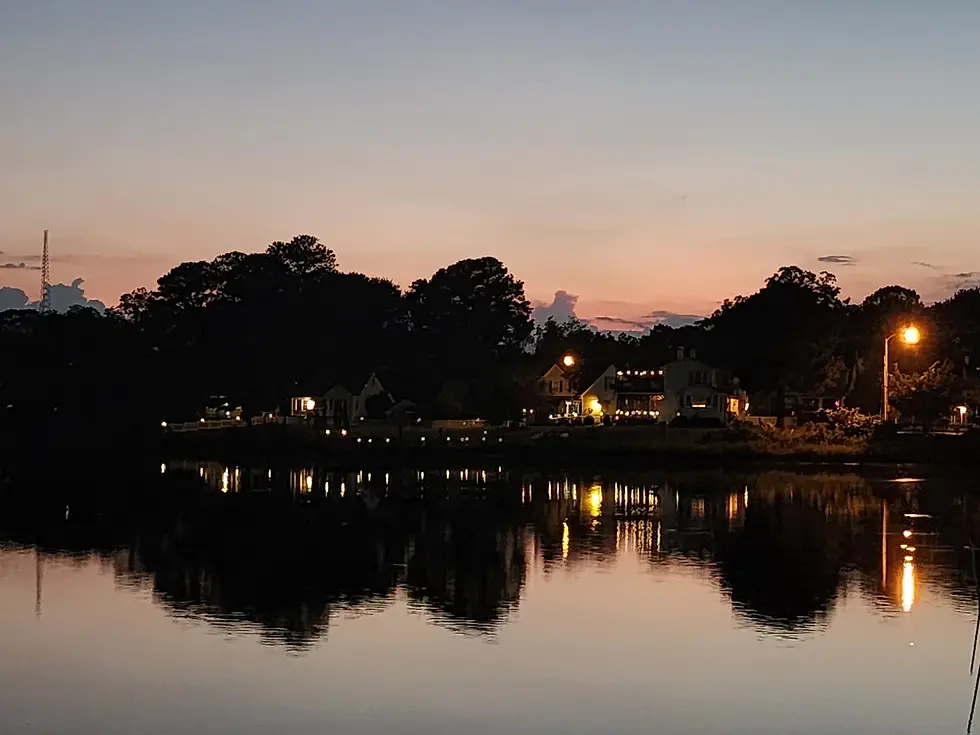
History lingers in the quiet shoreline
Portsmouth carries its history close to the water. The city grew beside tidal channels, working waterfronts, naval activity, trade routes, and neighbourhoods shaped by the Elizabeth River. The nearby shipyard tradition and the broader harbour have long tied daily life to tides, labour, travel, and return.
The creek belongs to that wider story. Its banks suggest a quieter register of history than dry docks or busy channels, but no less meaningful. Small waterways help shape communities in intimate ways. They guide where homes are built. They mark edges between neighbourhoods. They hold boats, storms, fish, marsh grass, and family stories.
A creek is not only scenery. It is a record of use and care.
People notice the tide because it affects their dock. They notice the wind because it changes the water. They keep an eye on weather, on shorelines, on old trees, on the slow wear of salt and time. Living near water creates a habit of attention. It teaches patience, caution, gratitude, and respect.
At dusk, that history feels present without needing to announce itself. The lights from homes along the shore may be modern, but the ritual is old. Lamps have always meant shelter. Water has always meant movement. A glowing window beside a dark creek carries both ideas at once: stay and journey, safety and distance, home and horizon.
For romantics, this is part of the spell. The scene seems to hold several times together. The present evening is there, complete and specific. Yet older evenings feel near, too. Other families, other boats, other storms, other quiet returns after work. The creek becomes a place where time thins out.
The water does not preserve history as a museum does. It preserves it through mood, rhythm, and repetition. The tide rises. The tide falls. Lights appear. Lights disappear. Another evening joins the long line of evenings before it.
A photographer’s eye finds beauty in restraint
This kind of scene rewards restraint more than spectacle.
The temptation is to chase the brightest light or the widest view. Yet the creek often gives its best images through small arrangements: three windows reflected under a dock, a single porch light trembling beside reeds, a line of gold broken by the wake of a passing boat.
Composition begins with waiting. The photographer watches how the water moves. Some ripples sharpen the light into bright strokes. Others soften everything into pastel haze. A breeze can ruin one frame and create the next. The creek keeps editing itself.
A few visual details make a dusk photograph feel alive:
Layered light
The best frames often hold three kinds of glow: the fading sky, the warm homes, and the broken light on the water.
Dark anchors
Pilings, branches, reeds, and rooflines give the eye a place to rest. Without darkness, the light has nothing to lean against.
A human trace
A lit window, an empty chair on a dock, or a small boat tied to shore can suggest presence without showing a face.
Soft motion
Slight blur in the water can make reflections feel painterly. Too much sharpness may miss the mood.
Nature lovers may notice another kind of beauty. The creek at dusk is not silent, even when it feels calm. Insects begin their thin music. Birds settle into hidden branches. Fish disturb the surface with quick rings that spread through the reflected lights. Leaves darken into masses. The air smells of water, mud, grass, and evening.
This is where the natural and the domestic meet. Porch light touches tidal water. Tree shadow crosses a roof. A heron’s hunting ground lies near a backyard fence. The scene is gentle, but it is not empty. It is full of lives overlapping at the day’s edge.
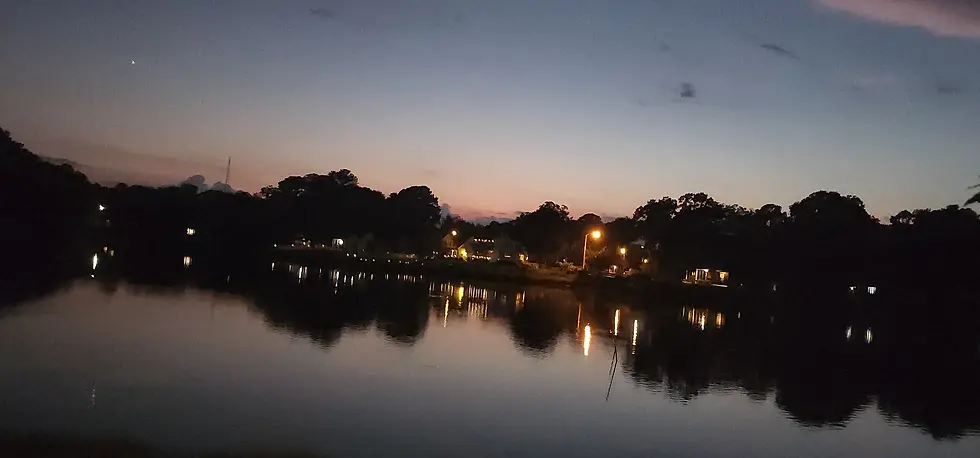
The creek invites memory and tenderness
There are places that make people speak more softly. This is one of them.
Maybe it is the way sound travels over water. A closing door seems farther away than it is. A laugh from a porch drifts out, thins, and disappears. A dog barks once, then the creek takes the silence back. Even cars on nearby streets feel muted by the presence of the water.
The scene can stir memories that do not arrive in order. They come as fragments.
A summer evening when the heat finally broke.
A hand held on a dock.
A grandparent’s porch light left on.
The first home that felt safe.
The last look back before leaving a place.
Water gives these memories room. It never asks them to become neat. It lets them remain half-lit.
That may be the deepest gift of twilight here. It does not offer escape from ordinary life. It reveals the grace already hidden inside it. A row of homes becomes beautiful because people live in them. A dock becomes meaningful because someone has stepped onto it in every season. A window matters because it marks warmth against the dark.
The creek makes visible what is easy to miss: home is not only a building. It is a glow cast outward. It is the way a life touches the world beyond its walls.
For those drawn to romance, the shoreline at dusk feels like a promise whispered rather than declared. The water gleams and darkens. The homes shine and settle. The sky lowers itself gently. Everything seems held in balance, close enough to touch, too delicate to keep.
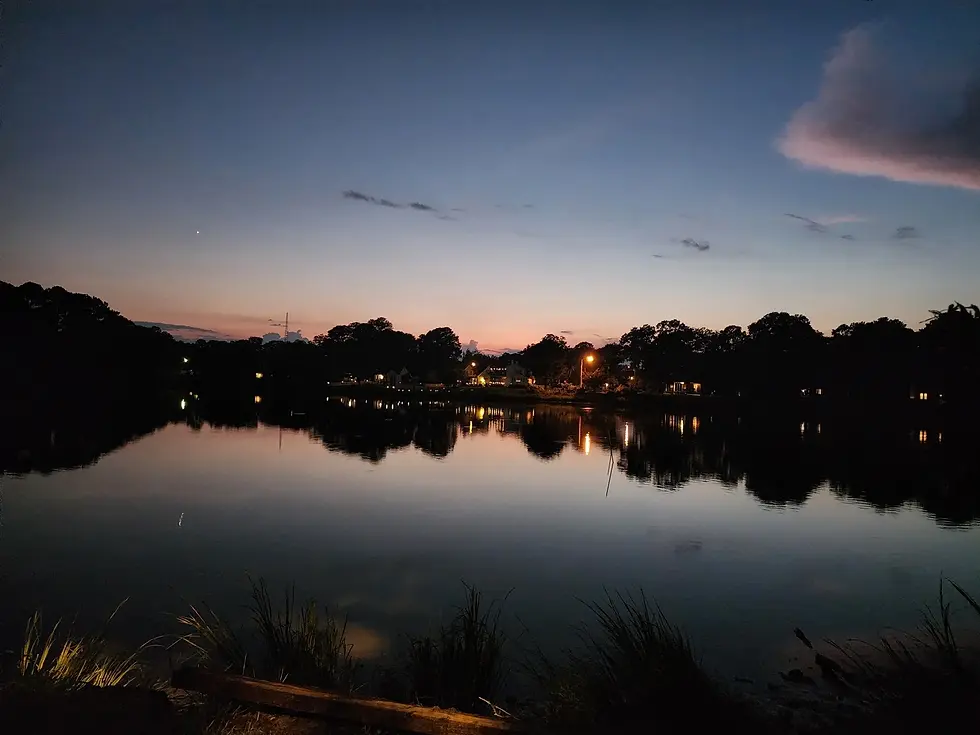
What the evening leaves behind
When night finally settles, the creek changes again. The houses become less visible. The sky loses its last colour. Reflections grow stronger in the dark, then simpler. Gold. White. A faint red. A broken line of light moving with the tide.
The scene no longer shows everything, and that is part of its power. It leaves space for feeling. It lets the mind finish the picture.
Twilight along this Portsmouth waterway is not grand in the way mountains are grand, or dramatic in the way storms are dramatic. Its beauty is quieter. It gathers in small lights, soft ripples, patient homes, and the old tie between community and water.
To stand there at dusk is to feel how place can hold both history and intimacy. The creek reflects houses, but it also reflects longing, memory, comfort, and time. It turns the familiar into something luminous.
And when the last bit of blue drains from the sky, one truth remains on the water: even the smallest light can travel farther than we expect.


Comments